

Running in Summer: How to Train in the Heat Safely and Without Unnecessary Fatigue

8 min read
27 komentarov
458
14
Sun, long days, and warm summer evenings provide the perfect backdrop for endurance training. However, when the thermometer exceeds 25°C, the environment places entirely different demands on the human body. Running in the heat isn't a dangerous extreme sport you need to panic about, but it does require an understanding of physiology, respect for your own limits, and a rational adjustment of your training plan.
Physiology
Why running in the heat is harder: Physiology and cardiovascular drift
Why does an easy summer run feel like a gruelling interval session even though your fitness level is the same? The answer lies in the human body's thermoregulation.
When you run, your muscles produce a massive amount of heat. To prevent overheating, the body triggers two primary cooling mechanisms:
1
Skin vasodilation: Blood vessels in the skin dilate, redirecting a portion of oxygenated blood away from working muscles towards the body's surface, where heat is released into the environment.
2
Sweating: The evaporation of sweat from the skin effectively cools the body's core.
However, this process places pressure on the cardiovascular system. The heart takes on a dual role—oxygenating muscles while simultaneously pumping blood to the skin for cooling. The result is known as cardiovascular drift. According to physiological studies (Périard et al., 2015), this is a phenomenon where heart rate gradually increases (often by 10 to 20 beats per minute) at the same or even lower intensity. It is not a sign of poor fitness, but rather a natural and logical response to heat stress.
Timing
The best time for summer running
If you want to train effectively without unnecessary thermal shock, the key is to avoid the window of peak solar activity (roughly between 10:00 and 17:00).
Early morning: The ideal time for summer training. Air temperatures are at their lowest, tarmac hasn't yet stored up heat energy, and humidity levels are usually more stable.
Evening after sunset: A suitable alternative, though you should factor in that the city and pavements may radiate stored heat long after dark.
Intensity
Track your heart rate and perceived exertion, not your pace
One of the most common mistakes for both beginners and advanced runners is trying to maintain the same pace as they do in the spring or autumn months. In summer, however, things work differently.
Prioritise heart rate and, ideally, perceived exertion: Stop focusing solely on your split times. Use heart rate tracking via a chest strap, but also learn to gauge your perceived exertion (the RPE scale from 1 to 10). In the heat, your watch might show a higher heart rate due to thermoregulation, even if the muscular effort is low. Heart rate is not a direct measure of performance, but rather an indirect physiological response to the body's current needs.
How should a runner feel? During standard aerobic runs, you should be able to hold a full conversation (conversational pace). If you are gasping for air and feel stifled by the heat, your effort is too high—regardless of how slow your actual pace is.
Rate of Perceived Exertion (RPE) scale for running
| Effort Level (RPE) | Running and breathing characteristics | How you feel / Conversation | Recommended for... |
|---|---|---|---|
| RPE 1 – 2 | Very light activity, almost no exertion. | Breathing completely calm, can sing without difficulty. | Warm-up, recovery run |
| RPE 3 – 4 | Easy, comfortable jog. Slightly elevated heart rate. | Breathing deeper, but able to speak in full, long sentences. | Base summer endurance runs |
| RPE 5 – 6 | Moderate-intensity run, you feel that you are working. | Speaking in shorter sentences, conversation starts to break up. | Tempo runs on a cooler morning |
| RPE 7 – 8 | High effort, demanding training. | Breathing is deep and fast, can only manage a few words at a time. | Short intervals in the shade |
| RPE 9 – 10 | Maximum effort, sprint. | Gasping for air, talking is impossible. Can only be held for a few seconds. | Maximum performance / training finishes |
Gear
What to wear for a summer run (including advanced cooling tips)
Choosing the wrong clothing can turn a run into an unpleasant experience. Forget traditional cotton – it absorbs sweat, holds moisture against the skin, gets heavy, and causes chafing.
Technical fabrics: Opt for ultra-lightweight synthetic materials (polyester/elastane) or fine merino wool, which wick sweat away from the skin instantly.
Light colours: White and light shades reflect sunlight, whereas dark colours absorb heat.
Headwear and eyewear: A lightweight, breathable white cap protects your head from direct radiation, and sunglasses with UV filters protect your eyes.
Advanced tips against overheating
Arm sleeves soaked in cold water: White compression or running arm sleeves protect against UV radiation. Soaking them in cold water before your run creates an evaporative cooling effect, which helps lower skin temperature. Forearms have a high density of blood vessels, so cooling this area helps improve overall thermal comfort.
Ice bandana: A bandana or neck gaiter filled with ice cubes and tied around the neck. The ice cools the blood flowing to the brain via the carotid arteries, and the melting water keeps your chest pleasantly damp.
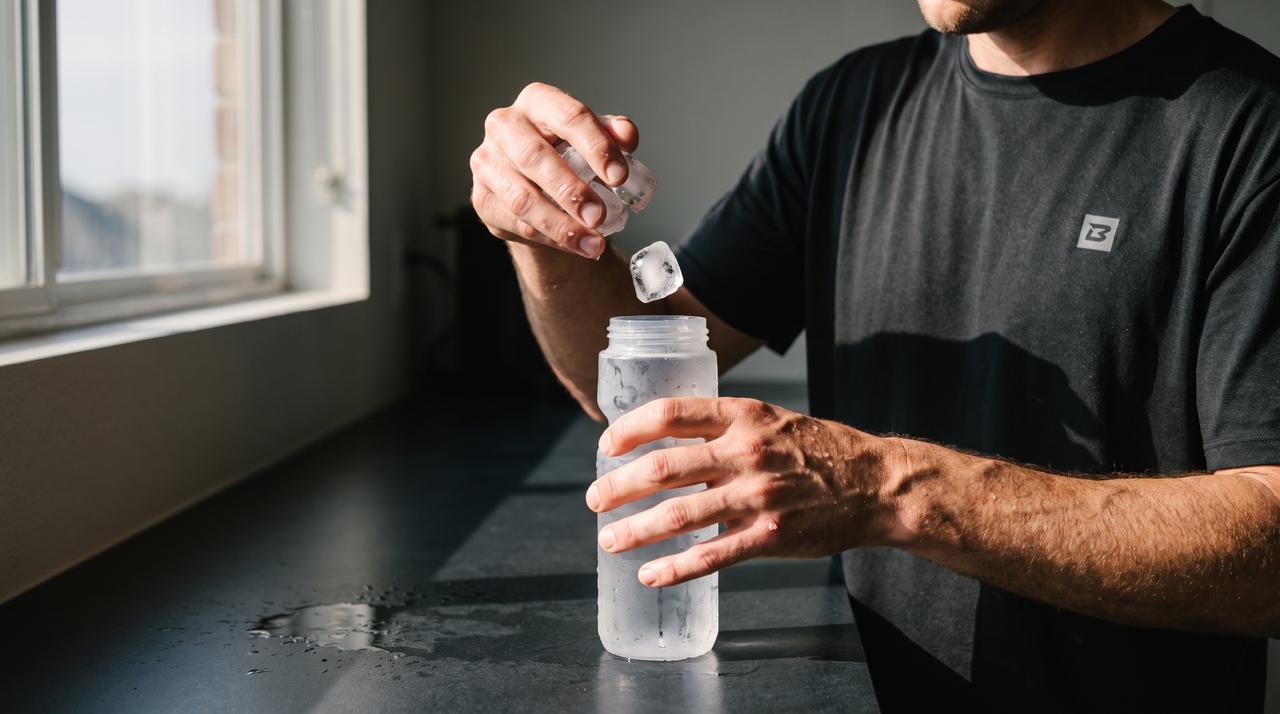
Ice in your water bottles: Add not just cold water to your sports bottle, but ice cubes as well. A cold drink helps lower internal core temperature more effectively.
Using natural resources and cooling the head
The head and neck function as the human body's main radiator. If your route passes natural sources, don't be afraid to make the most of them:
Cap as a cold compress: If you're wearing a running cap, don't hesitate to soak it under a public drinking fountain, stream, or submerge it in a brook for a moment. A wet cap and cold water function as an effective cooling compress—thanks to the physical principle of conduction, heat is transferred directly from your warmer head to the cooler water. This contact quickly cools the head area, providing instant relief to an overheated body. On particularly hot days, you can even place a handful of ice inside your cap if available.
Cooling off in streams and fountains: During longer summer trail runs or runs in hot cities, a great tactic is to use a natural stream, mountain river, or public fountain to cool off. A quick dip of the wrists, splashing water on your face, a few drops behind your neck, or running through cold water for a few seconds provides immediate mental relief and helps lower heart rate intensity and reset your overall thermal comfort.
Hydration
Hydration, gut training and the myths about cramps
Fluid loss from sweating can reach 1 to 2 litres per hour during long runs. Dehydration directly impairs your thermoregulation capacity and increases the strain on your heart.
Conscious intake and longer runs (over 90 minutes): For runs exceeding an hour and a half, don't rely solely on thirst—people often don't realise how much they are actually sweating. Conscious and regular fluid intake is key. You should also train your gut to handle larger volumes of fluid—start with smaller amounts and gradually increase them during your training sessions.
Connecting with pace: When you drink more during a run, it is perfectly normal and beneficial to slow your pace slightly so the fluid in your stomach can be absorbed safely. Over time, you will learn to drink sufficiently while maintaining the best possible performance. For runs over 60 minutes, don't forget your electrolytes.
The cramp myth: For years, it was believed that running cramps were caused by simple dehydration or a lack of magnesium or sodium (electrolytes). However, modern sports medicine has updated this theory—the primary cause of acute muscle cramps is neuromuscular fatigue (Nelson & Churilla, 2016). They occur when a muscle is chronically overloaded, leading to a failure in neuromuscular control. Hydration and electrolytes are important for overall health, but they won't magically eliminate cramps if the muscle is simply exhausted.
Safety
Signals that you should stop your training
The body is a perfect machine and will send warning signs in time if the strain exceeds tolerable limits. You don't need to panic, but you should treat your body's warnings rationally. It is sensible to pause training, switch to walking, or finish the session entirely if you feel:
1
Mild dizziness, sudden fatigue, or unusual heaviness in your legs.
2
Nausea or overall weakness.
3
A significant drop in performance accompanied by the feeling that you cannot 'catch your breath'.
4
Any signs of disorientation – in this case, it is necessary to immediately find shade, stop your activity, and cool down.
Overview
How to adapt training to the temperature
| Outside temperature | Recommendation for runners |
|---|---|
| Up to 20 °C | Normal training without restrictions |
| 20 – 25 °C | Slightly reduce pace, ensure regular hydration |
| 25 – 30 °C | Significantly shorten training, slow down, include electrolytes |
| Above 30 °C | Consider moving training to early morning, or opt for an indoor alternative (treadmill in an air-conditioned gym) |
References
Nelson, N. L., & Churilla, J. R. (2016). A narrative review of exercise-associated muscle cramps: Factors that contribute to neuromuscular fatigue and management implications. Muscle & Nerve, 54(2), 177–185.
Périard, J. D., et al. (2015). Cardiovascular Drift and Maximal Oxygen Uptake during Running and Cycling in the Heat. Frontiers in Physiology.